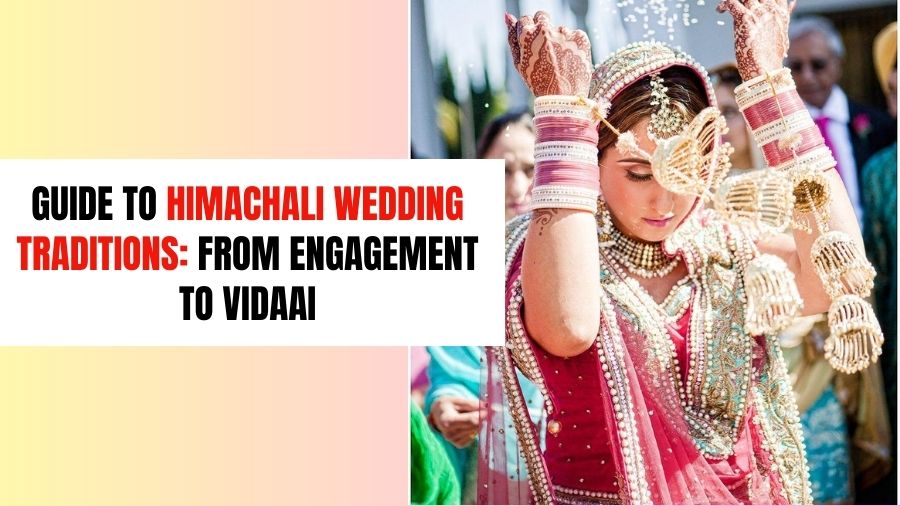

Himachal Pradesh is a beautiful Indian state in the foothills of the Himalayas. It is known for its temples, natural beauty, rich culture, unique geography, and marriages. Himachali weddings are a vibrant multi-day celebration and are deeply rooted in Himalayan culture. Most of the Himachali weddings follow ancient Vedic customs and unique local traditions. It features spiritual elements with local deities, lively folk music, grand feasts, and unique rituals from the initial engagement to the final farewell. If you are interested in Himachali weddings and want to know more about their customs, then keep reading this blog. Here we will take a closer look at Himachal wedding customs and rituals.
Himachal Pahari Rituals Explained
1. Pre-Wedding Rituals
Himachali’s pre-wedding rituals start with events like engagement (Roka), Haldi, Devta puja, and Mehndi. Also, events like mama swagat, where the bride’s maternal uncle is honoured, and traditions like sehra bandi. These events blend traditional Himachal wedding customs, family gatherings, and blessings for a smooth union.
Matchmaking
Matchmaking is the first step of Himachali weddings, where the matchmaker (Dhamu) is appointed to find a perfect match for both the groom and bride. The matchmaker exchanges family details and consults astrologers to match the kundli and gotra. When everything is aligned, the marriage is confirmed. When everything is confirmed, then the groom’s side receives a blessing and a gift called Tika, symbolising the agreement of marriage.
Roka
The meaning of the Roka is “to stop.” It symbolised the end of the search for a life partner and confirmation of the union. It is the first pre-wedding ritual. It happened months before the actual marriage. In this ritual, the elder applies a tilak, blessings, sweets, and gifts. It is a basic event, like an engagement, focusing on family bonding and blessing the couple’s journey.
Devta Puja
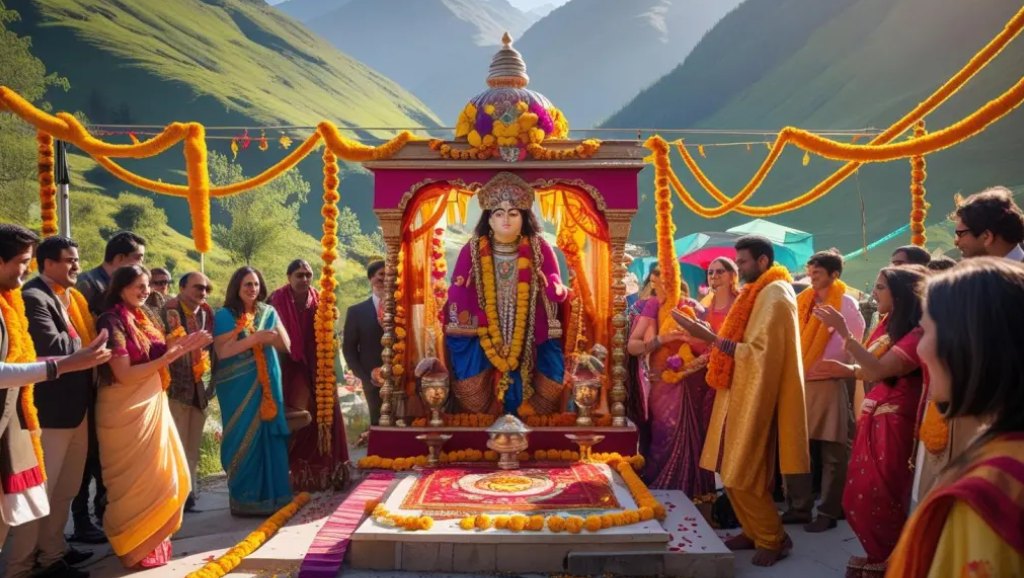
In Himachali weddings, Devta puja is an important pre-wedding ritual where families seek blessings for prosperity and happiness. It involves prayers to their kul devta for divine protection. Families pray at home or visit temples to ask blessings for the weddings. Deities are seen as the protectors of the family. So offerings and prayers are made to ensure the couple’s happy married life.
Mehndi Ceremony
In Himachal wedding customs, the mehndi ceremony is a vibrant, pre-wedding ritual. Henna brings luck and signifies joy, beauty, and the fortune of the marriage. The darker the mehndi, the deeper the love. It is the joyful moment of celebration and relaxation for the bride with loved ones before the main wedding.
Mama Swagat
In Himachal wedding customs, the mama swagat is an important and vibrant pre-wedding ritual where the bride’s and groom’s maternal uncles arrive at the wedding home. Mama comes with his family, shares blessings, and gifts the bride with the traditional items like a chunri. This event is the beginning of the key rituals, like the haldi ceremony at the groom’s side. This ritual symbolises the strong family bond and protective role of the mama.
2. Wedding Day Rituals
Milni (Groom’s Welcome)
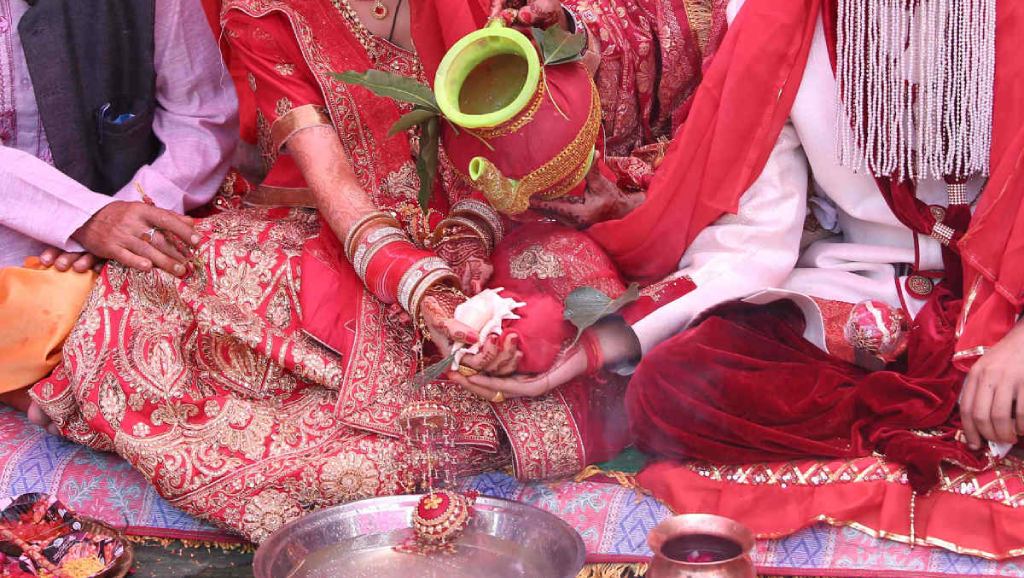
The milni ceremony in Himachal wedding customs is a joyful wedding day ritual where the groom’s family (Barat) arrives, and the bride’s family warmly welcomes them. It symbolises the official union of two families through exchanges of milni malas, cash, and clothes. It exchanges the respect, unity, and introduction among elders amidst music, dances, drums, and festive songs.
Sehra Bandi
A Sehra is a decorative headpiece. It is made traditionally from jasmine flowers and pearl strings that cover the groom’s face. It is a key ritual on the wedding day, where the female relatives tie sehra onto the groom’s turban. This ritual is performed just before the groom’s departure for the bride’s home with his barat.
Kanyadaan
In Himachali weddings, Kanyadaan is a deeply significant ritual, where the bride’s father places her hand in the groom’s hand. It symbolises that the father is giving her daughter to the groom and marking the beginning of their shared life.
Mandap and Pheras
In Himachal wedding customs mandap is a spiritual altar. It is decorated with flowers, fruits, and other items. It serves as the centrepiece of the wedding. A sacred fire (Agni) burns in the centre, acting as a divine witness of the vows. The pheras are the seven rounds the couples take around this fire. It symbolises their seven vows.
Sindoor Dan and Mangalsutra
In a Himachali wedding, the sindoor dan and mangalsutra are the main rituals right after the seven pheras. It symbolises the groom’s commitment and the bride’s lifelong bond. The red sindoor is a symbol of love and devotion, while the mangalsutra is a symbol of good fortune, love, and holy union for eternity.
3. Post-Wedding Rituals
Bidaai
In Himachal wedding customs, the bidaai is the emotional post-wedding farewell ceremony of the bride’s departure from her parental home to her husband’s home. This ritual symbolises the transitions of the bride into a new phase of her life.
Grah Pravesh
In Himachali culture, grah pravesh is a traditional Hindu ritual with unique local customs. After the bidaai, the bride arrives at the groom’s house, and her mother-in-law welcomes her. This ritual symbolises the role in the family. In turn, the bride brings gifts to her mother-in-law as a gesture of love and respect.
Dham
The Dham is a grand celebration at the groom’s house after the grah pravesh of the bride. Following the formalities, the groom’s family gathers for a grand meal signifying the end of the wedding.
Fironi
In Himachal wedding customs, the Fironi is a post-wedding ceremony where the bride returns to her parental home. Her family came to take her home for a brief stay. Later, the groom visits her parents’ home to bring his bride back.
Conclusion
Himachal Pradesh is a very beautiful Himalayan state, known for its natural beauty, customs, and traditional weddings. The weddings of Himachal Pradesh are very special due to their spiritual roots, community involvement, and unique rituals. Unlike modern weddings, Himachal wedding customs stand out for their grounding in nature, traditional practices, and deep community spirit, making them truly enchanting. They use traditional ways, like appointing a Dhamu to find a match for their child.
People in Himachal Pradesh are switching from the traditional method, and they are using online platforms to find a perfect match for their child. If you are also looking for a trusted online matrimonial platform, then you can visit Wedmoo. Our matrimonial platform is for Himachali people. We connect individuals for marriage by prioritising cultural compatibility, and we ensure that users connect with genuine individuals who are serious about marriage. We aim to blend technology with traditions to create a trusted and safe space for Himachalis to find their life partner. You can visit Wedmoo to make your search for a life partner easy.